 Pickleball Log
Play pickleball.
It remembers the journey.
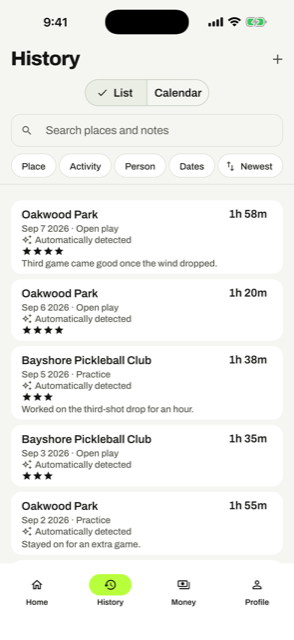
Tell it where you play. After that it notices when you arrive at the court and when you leave, and writes the session down — while your phone is in your bag and the app is closed.

In review with Apple. Nearly there.
Free on iPhone.
It runs by itself
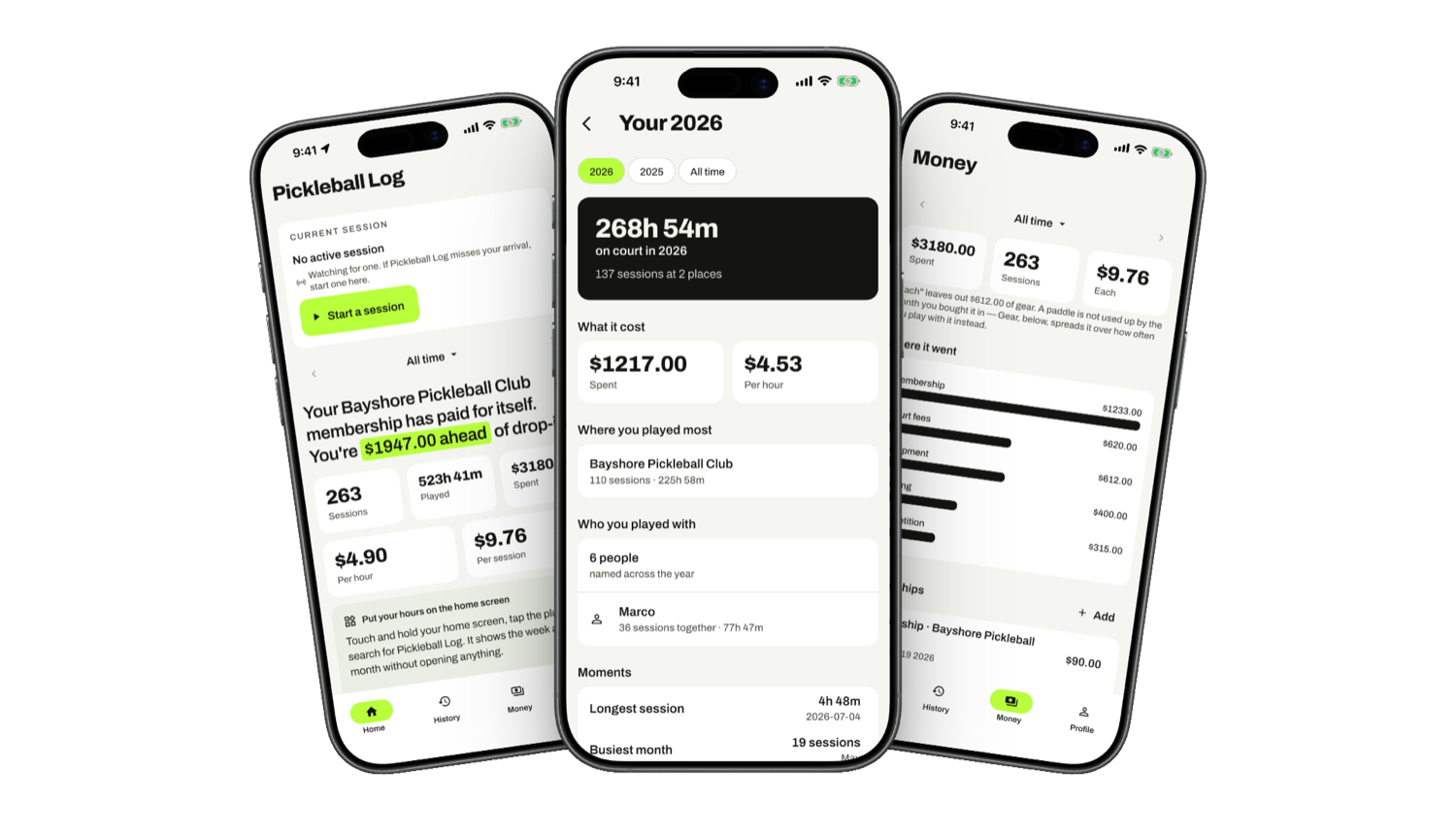
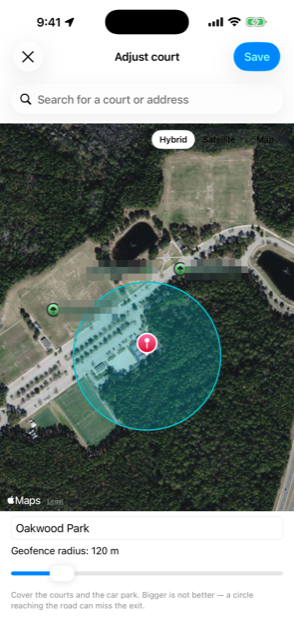
Pick the courts you play at and draw a circle round them. That is the whole setup. From then on a session starts when you arrive and ends when you leave — no timer to remember, and nothing to tap when you would rather be warming up.
When it misses one, and occasionally it will, you can start, correct or add a session by hand. It counts exactly the same.
App Store privacy label
Data Not Collected
There is no account and no sign-up. There is no Pickleball Log server, because there is nothing to send anywhere. No analytics, no advertising, no tracking — your history is a file on your iPhone, backed up the way the rest of your phone is, and exportable whenever you like, photos included.
That is not a promise about how we handle your data. It is that we never receive it.
The privacy policy has the full detail, including the two places the app talks to Apple.
The part worth paying for is the arithmetic
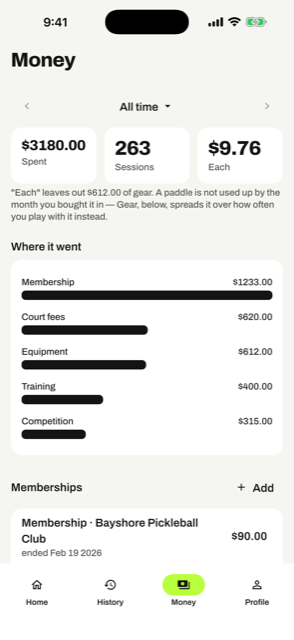
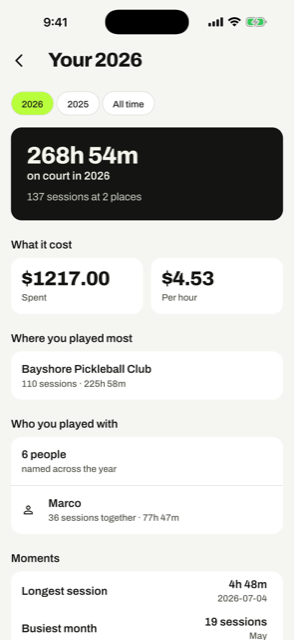
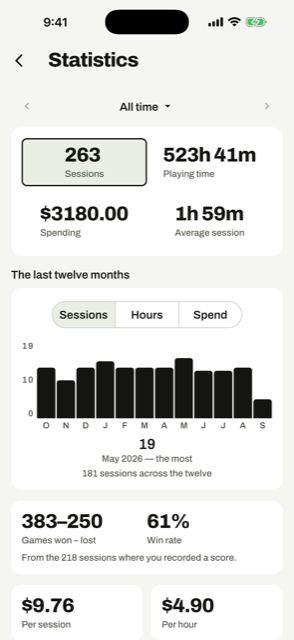
Recording is free. What costs money is the layer on top: what an hour on court actually costs you, whether your membership is paying for itself measured against the drop-in fees you really paid, what your paddle has cost per hour of play, who you have played with most, and how a season compares with the one before.
Free, and paid
Free
Always
- Automatic detection at every court
- Manual entry and correction
- The complete history, search and calendar
- Scores, notes, photos and people
- Expenses and equipment
- The last 90 days, worked out
- A complete export, photos included
Pickleball Log Pro
$24.99/year
or $4.99 monthly
- All-time statistics, not just 90 days
- Your pickleball year, as one page
- Cost per hour, per session, per paddle
- The membership verdict, over any period
- When you play, and who you play with most
- Season against season
We will never charge you to write your own history down. If you stop paying, everything you recorded is still yours and still exportable.
A look at it
Before you buy
Pickleball Log needs Always location access to notice sessions while it is closed — that is the whole idea, and it is why the app can log a session you never opened it for. It only ever looks at the courts you add. It has no interest in anywhere else you go, and nothing it sees leaves the phone.
Battery cost is small: this uses the same geofencing iOS already runs for reminders, not continuous GPS.
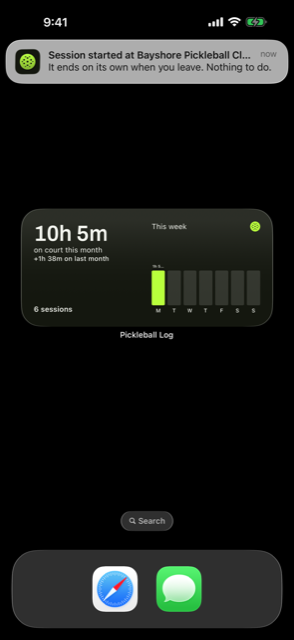
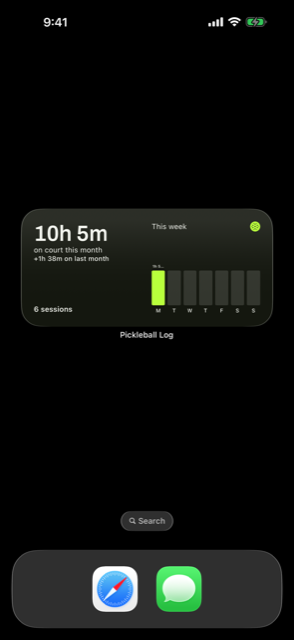
iPhone only. There is a home screen widget, and it can tell you what it recorded when you leave a court.